
If you had a leaky water pipe, you wouldn’t hesitate to call a plumber to fix it to avoid wasting water. You should have the same mindset when you’re wondering whether you should worry about how to seal leaky air ducts. Such leaks can waste money on your energy bills.
Learn more about what to do and then contact our team at Altman’s Cooling & Heating for expert air duct sealing in Titusville, FL.
Leak Detection Comes Before Learning How To Seal Leaky Air Ducts
Before you make any repairs to your ductwork, you need to take steps for leak detection. You need to know where the leak is occurring before you add materials to block the leak.
Turn on the fan for your HVAC system and access the areas where the ductwork is visible. Check any areas where two sections of duct connect to each other. Move your hands around these connections, and if you feel air movement coming from the ducts, you have a leak.
If you don’t feel comfortable doing this process yourself, you can always call a heating and cooling professional to help. HVAC technicians may be able to run a test that measures the performance of the ducts, making it easier to find the leak. They may use smoke or an infrared light to spot leaks.
Why Leaky Air Ducts Can Increase Your Energy Costs in Titusville, Florida
One reason why it’s important to learn how to seal leaky air ducts is because of the wasted energy these leaks cause, increasing your utility bills. In Titusville, Florida, we rely heavily on our climate control systems, making air leaks expensive.
When you are losing heated air from the furnace or cooled air from the AC unit into a crawlspace or your attic, you’re wasting energy. The HVAC system must work harder when some of the air is leaking away, meaning it needs more energy to maintain the desired temperature in your home or business. By fixing the problem, your system can run more efficiently, which should reduce your energy bills.
Steps You Can Take To Fix a Leaky Air Duct
You can take multiple steps that have proven successful in stopping air leaks from ductwork.
For example, when installing your ducts, an HVAC professional might use mastic tape on all common leak points. If you notice old, loose mastic tape on your ducts, this is a potential source of the leak.
You can replace it with new mastic tape, but you should not use duct tape in place of mastic tape. Duct tape will break down prematurely, as it cannot survive the higher temperatures of heated air moving through the ducts.
Other potential solutions include:
- Foil or metal tape: Foil tape is available at nearly any hardware store. It has an aluminum top layer that makes it especially effective in blocking air gaps in your ducts. Unlike cheaper options, this tape should not lose its adhesion when hot air is moving through the ducts.
- Mastic Sealant: For areas where you cannot access the duct to control the leak, applying a sealant like Aeroseal can block the leak. An HVAC professional must apply this sealant.
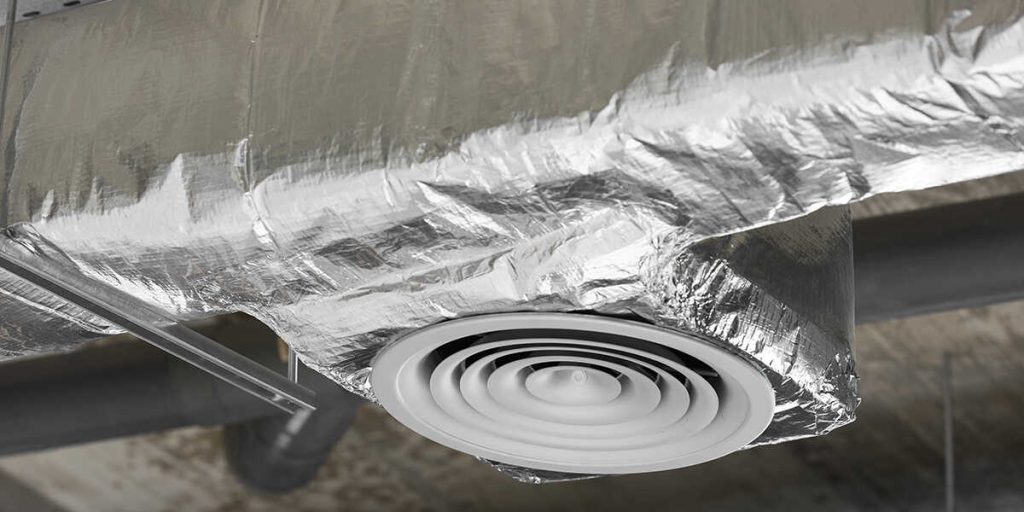
- Duct insulation: Adding insulation to the outside of your ducts in areas where you don’t have temperature control, such as an attic, can make your heating and cooling system more efficient. It also can minimize the impact of leaks.
Although some people will be able to take these steps for sealing leaky air ducts on their own, other people may want to call the professionals. An HVAC expert can apply the materials needed to stop air duct leaks and have your system running in top condition.
Wondering How To Seal Leaky Air Ducts? Let Our Titusville, Florida, HVAC Experts Help
At Altman’s Cooling & Heating, our experienced heating and cooling technicians are ready to serve you. We can handle a wide range of problems with your heating and cooling systems, including figuring out how to reset an air conditioner breaker, installing a smart thermostat, and performing air conditioner or furnace repairs.
We can explain the importance of stopping air duct leaks. We are the experts in Titusville, Florida, for helping you learn how to seal leaky air ducts. We can do the work with minimal stress for you, too. To set up an appointment or to learn more, reach out to our team of HVAC experts today.